June 2026 Jobs Miss: What +57K Payrolls Mean for Your Search
The U.S. added just 57,000 jobs in June 2026 — a miss vs. forecasts. Here's what the weak payroll report means for your job search and what to do now.
What Happened: BLS June 2026 Jobs Report, July 2, 2026
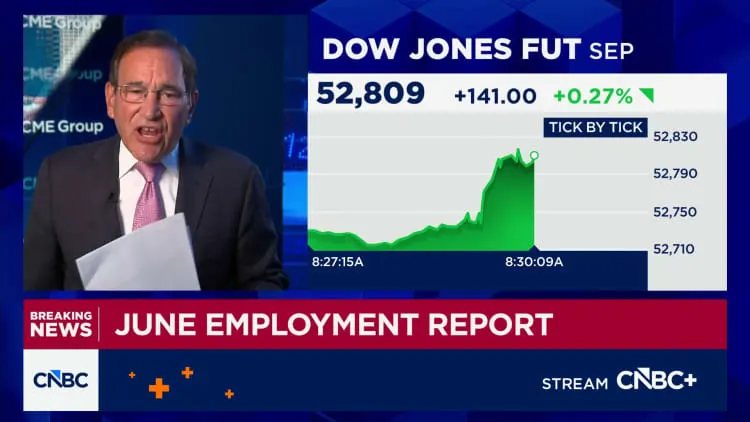
The U.S. labor market had a rough June. The Bureau of Labor Statistics (BLS) reported on July 2, 2026 that total nonfarm payrolls increased by just 57,000, well below the 115,000 Dow Jones consensus forecast and a sharp drop from May's downwardly revised 129,000. The unemployment rate edged down to 4.2%, but that number is more complicated than it looks. It's the weakest monthly gain in four months, and it lands in a market that was already softer than most headlines let on.
What this means if you're job hunting right now
The honest read: this report confirms what many active job seekers have already felt. The market is slow, but it hasn't collapsed. The 57,000 print is actually close to the average monthly gain over the prior 12 months (+36,000), which tells you this isn't a sudden crash. It reflects a labor market that has been running at a depressed baseline for well over a year.
That context matters because it shapes your strategy. A flat market rewards precision over volume. Sending 50 generic applications won't work the way it might have in 2021. What works now is targeting the sectors still adding jobs, tailoring every document to the role, and moving faster than the competition when a real opening appears.
There are still sectors hiring, and knowing which ones puts you ahead of most candidates who are applying blind.
Key numbers at a glance
"Nonfarm payrolls rose just 57,000 in June, roughly 58,000 below forecast and the weakest gain in four months."
- +57,000: June nonfarm payroll gain (vs. +115,000 consensus forecast)
- 4.2%: Unemployment rate (down from prior month, but driven by falling participation)
- 61.5%: Labor force participation rate, the lowest since March 2021
- -507,000: Household employment drop; more people simply stopped looking for work
- -74,000: Combined April and May payroll revisions, meaning the market was already weaker than reported
- +3.5%: Year-over-year average hourly earnings growth (wages are still trailing the 3.8% inflation rate)
- $37.64: Average hourly earnings for private nonfarm employees in June
Which workers and job seekers feel this first
Not everyone is equally exposed. Where you sit in the market right now depends heavily on your industry and role type.
Most affected by the slowdown:
- Leisure and hospitality workers: the sector shed 61,000 jobs in June, the biggest single-month decline since 2020. The expected World Cup hiring boost never materialized. Goldman Sachs had forecast a 40,000-job lift that simply didn't appear.
- Retail, manufacturing, and construction workers: employment in these sectors was essentially flat, with no meaningful hiring activity.
- Early-career candidates without specialized skills: a slow market tightens the funnel fastest at the entry level, where competition is densest and differentiation is hardest.
Least affected, or actively benefiting:
- Health care and social assistance professionals: together added roughly 47,000 jobs in June. Health care has been the primary driver of labor market growth for over a year.
- Professional and business services candidates: added 36,000 jobs and remains one of the more consistent bright spots.
- Private education workers: part of a broader private education and health services cluster that added 69,000 jobs spread across subsectors.
What employers and recruiters are doing now
The frozen market has a name. For the better part of 18 months, hiring has stalled across large portions of the economy, a result of pandemic-era overhiring hangovers, AI-driven workforce restructuring, and sustained economic uncertainty. Many employers are in a holding pattern: not actively laying off, but not opening new roles either.
On the recruiter side, this looks like longer timelines, more internal referrals, and a much higher bar for "good enough." Companies that are hiring are doing so deliberately, often backfilling critical roles rather than expanding headcount. Job postings are fewer, competition per posting is higher, and the hiring process is slower than it was two or three years ago.
Leisure and hospitality employers are a specific case. The sector's unexpected June loss, despite World Cup and Fourth of July activity that should have driven seasonal hiring, points to something structural rather than seasonal. Even White House Economic Council Director Kevin Hassett described the data as "a little bit of a puzzle."
What you should do this week
A weak jobs report isn't a signal to wait. It's a signal to get smarter. Here are five concrete moves to make right now.
Rotate your target list toward growing sectors. Health care, social assistance, professional services, and private education are all adding jobs. If your skills transfer to any of these fields, update your target company list this week. Don't wait for openings to find you.
Renegotiate your salary expectations, but armed with data. Wages grew 3.5% year over year while inflation sits at 3.8%. That gap means real pay cuts for people who accept offers without pushing back. Use the $37.64 average hourly earnings figure as a baseline benchmark when evaluating offers in your field.
Treat the participation rate drop as your opportunity. With 507,000 fewer people in the labor force, some of your competition has simply stopped looking. If you stay active, visible, and applying, you're competing against a smaller pool than the headline unemployment rate suggests.
Watch the revised numbers and call out your value clearly. April and May payrolls were revised down by a combined 74,000 jobs. Employers know the market is weaker than it looked. That makes a strong, quantified resume more important than ever. Lead every bullet point with a result, not a responsibility.
Don't write off hospitality and leisure permanently. The June loss is likely a seasonal anomaly mixed with structural uncertainty. If that's your sector, use this slow period to earn a certification, update your portfolio, or build recruiter relationships so you're first in line when hiring resumes.
What to watch next
The next major data point is the July 2026 jobs report, expected in early August. It will tell us whether June was a one-month blip or the start of a trend. Watch the Federal Reserve's response too: a second consecutive weak report could accelerate rate cut discussions, which historically loosen credit and eventually spur business hiring. The BLS will also release updated labor force participation and U-6 data in July, which will clarify whether discouraged workers are beginning to re-enter the market or pulling back further. We'll have full coverage the moment those numbers drop.
Editor's Picks
News 57,000 Jobs Added: How to Get Hired in the 2026 Slowdown
Jul 10, 2026
 Interviews
 Ace Your AI Video Interview in 2026: HireVue Tips & Prep Guide
Jul 10, 2026
 Resume
 Beat AI-Powered ATS in 2026: What Your Resume Must Do Now
Jul 10, 2026
 Skills
 Best AI Skills to Put on Your Resume in 2026 (Get Hired Fast)
Jul 10, 2026