How to Answer "Tell Me About a Time You Failed" in 2026
Learn how to answer "Tell me about a time you failed" in 2026 using the STAR+L framework, real example answers, and mistakes to avoid.
How to Answer "Tell Me About a Time You Failed" in 2026
Most candidates dread this question, and that dread is exactly why nailing it puts you ahead. "Tell me about a time you failed" trips up smart, qualified people every day, not because they lack good stories, but because they haven't thought clearly about what the question is actually asking. By the end of this guide, you'll have a structured framework, a ready-to-use example answer, and a clear checklist so your next interview feels like a conversation, not an ambush.
What interviewers are actually evaluating
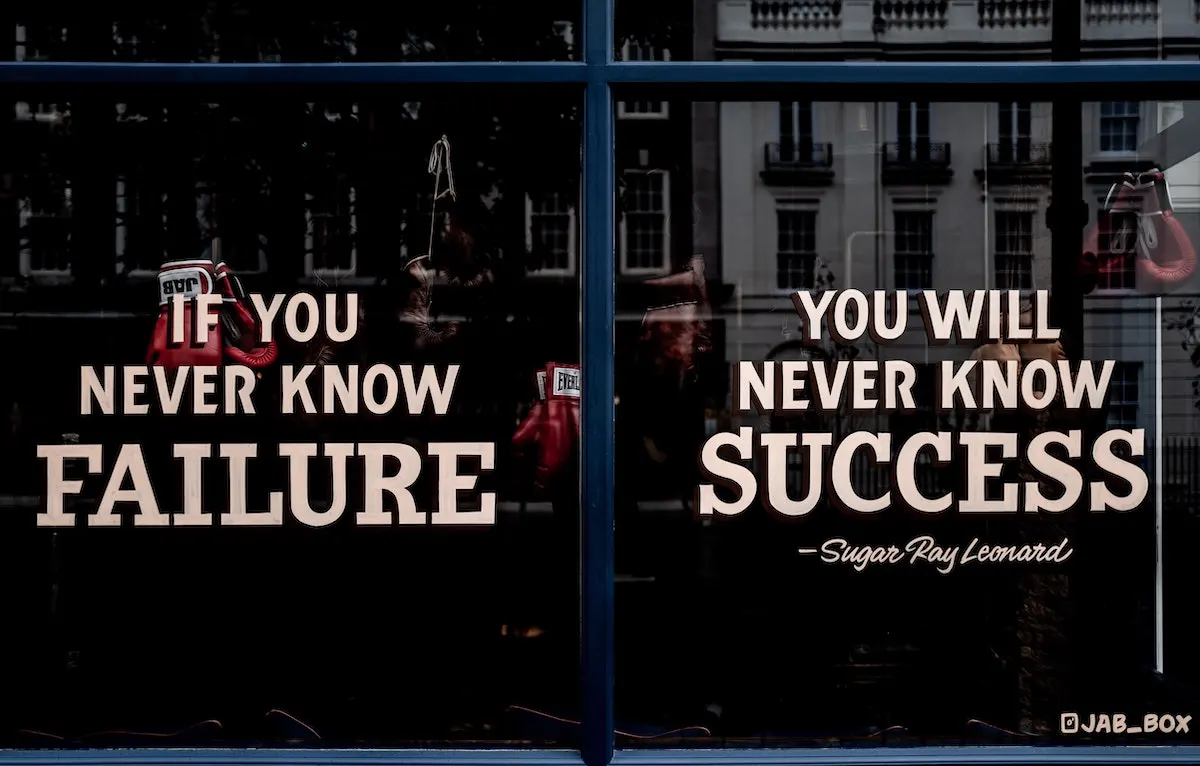
This question isn't a trap. It's a window. Interviewers use it because your resume lists every win you've ever had, which tells them nothing about how you handle the inevitable moments when things go sideways.
According to the World Economic Forum's Future of Jobs Report 2025, resilience, flexibility, and agility have seen a 17-percentage-point jump in importance among employers since 2023. They now rank among the top three core skills globally, sitting just behind analytical thinking. Your answer to this question is a direct test of the skills employers want most in 2026, not a peripheral personality check.
Specifically, hiring managers are probing for:
- Self-awareness: Do you actually know you made a mistake, or do you still think it was someone else's fault?
- Accountability: Do you own the failure cleanly, without deflecting or over-qualifying?
- Growth mindset: Did the experience change how you think or work? Can you articulate how?
- Emotional maturity: Can you discuss a real setback without becoming defensive or performing false humility?
- Evidence of learning in action: Did you apply what you learned in a measurable way, or was it just a nice insight you filed away?
Salina Hoque, Director of HR and Community Engagement, puts it plainly: "This isn't about embarrassment; it's about resilience. We're looking at how you overcome difficulties. Explain the 'why' and the 'how' of your learning process." The failure itself is almost beside the point. The story around it is everything.
The preparation framework: STAR+L in four steps

The standard STAR method (Situation, Task, Action, Result) is a solid foundation for behavioral questions. For failure questions specifically, though, it leaves out the most important part. The upgraded version, STAR+L, adds a fifth element: Learning. That's the piece that separates a forgettable answer from one that earns genuine respect.
Here's how to build your answer step by step.
Step 1: Choose the right failure story
This is where most candidates stumble. They either pick something so minor it reads as evasive ("I once sent an email to the wrong internal list...") or something so catastrophic it raises real red flags. The sweet spot is a genuine professional setback that had real consequences, was clearly within your control, and from which you can show concrete learning.
A few rules for choosing your story:
- Pick a failure that is yours to own, not your team's failure, your manager's bad call, or an industry downturn.
- Choose something professional, not personal. This isn't therapy; keep it work-relevant.
- Make sure the story has a clear before and after: something changed in how you worked because of it.
- Avoid failures that would make a hiring manager question your basic competence for this role.
Good examples: missing a project deadline because you underestimated scope, losing a client because of a miscommunication you caused, launching a feature that flopped because you skipped user research.
Step 2: Map your story to STAR+L
Once you have your story, structure it with these five components:
- Situation: Set the scene briefly. What was happening, what was at stake, and what was the context?
- Task: What were you specifically responsible for? Make your role crystal clear.
- Action: What did you do (or fail to do) that led to the failure? Be direct and honest here, no hedging.
- Result: What happened? Name the real impact. Numbers help: a missed deadline, a lost contract, a dropped metric.
- Learning: This is the most important section. What did you change? What did you do differently next time, and what was the outcome of that change?
The Learning section transforms your answer from a confession into a demonstration of the exact skills interviewers are assessing.
Step 3: Practice aloud, with a timer
Reading your answer in your head is not practice. Say it out loud and aim for 90 to 120 seconds. If you're running past two minutes, you're over-explaining the failure and under-delivering on the learning. If you're under 60 seconds, you're not giving enough context for the story to land.
Record yourself on your phone at least once. You'll catch filler words, passive voice, and places where you sound defensive, things you can't hear when you're inside your own head.
Step 4: Prepare two stories, not one
Different interviewers will probe differently. Some will accept your first answer and move on. Others will follow up with "Can you give me another example?" Have a second story ready, ideally from a different functional area of your work (one from a project context, one from a leadership or communication context, for instance).
Full example answer using STAR+L
Here's what a strong answer actually sounds like. Use it as a template, not a script, because your story should be yours.
The question: "Tell me about a time you failed."
The answer:
"In my second year as a marketing coordinator, I was given the lead on a product launch campaign for a mid-tier software update. I was confident in the creative direction and moved quickly, maybe too quickly. I didn't loop in the customer success team until two weeks before the launch, which meant we missed a critical insight: our existing users were already frustrated with the product's onboarding flow, and the campaign was amplifying features they hadn't been able to use successfully yet.
The launch didn't fail outright, but the conversion numbers were well below our 15% target. We came in at 6%. The campaign generated leads we couldn't retain because the product experience didn't match what we'd promised.
I owned that in the debrief. I'd treated the campaign as a creative project instead of a cross-functional one, and I didn't ask the right questions early enough.
After that, I built a pre-launch stakeholder review into every campaign brief I wrote: a mandatory two-week checkpoint with customer success and product before any content goes live. I've led six campaigns since then, and our average conversion-to-retention rate has improved by roughly 22% across those projects. The process change became standard practice on our team."
Notice what this answer does: it names a real number for the failure (6% vs. a 15% target), takes clean ownership, explains the root cause without blame, and closes with a concrete change and a measurable improvement. That's the formula.
Mistakes that eliminate candidates
These aren't just weak answers. They're the ones that actively cost people job offers.
Choosing a "disguised strength" as your failure. "I work too hard" or "I'm a perfectionist" signals that you can't answer the question honestly. Fix: pick a real failure and trust that owning it makes you look stronger, not weaker.
Blaming someone else. Even subtle deflection ("The project failed because the brief wasn't clear...") reads as a red flag for accountability. Fix: identify specifically what you did or didn't do that contributed to the outcome.
Skipping the learning entirely. Ending your answer at the result ("and unfortunately the campaign underperformed") leaves the interviewer with nothing. Fix: always close with what changed and, if possible, what the outcome of that change was.
Choosing a failure that's too close to the core requirements of this job. If you're interviewing for a sales role and your failure story is about consistently losing deals with no recovery, you've raised doubts about your fitness for the position. Fix: save job-adjacent failures for when you can pair them with a very clear and credible learning arc.
Over-qualifying the failure with context. Starting with "Well, it was a really difficult situation and there were a lot of factors..." reads as defensive before you've even begun. Fix: open with the situation cleanly and let the facts speak for themselves.
Being vague about the impact. "It didn't go great" tells the interviewer nothing. Fix: quantify the result wherever you can: deadline missed by how many days, budget overrun by how much, metric that dropped to what level.
Pre-interview prep checklist
Run through this before any interview where behavioral questions are on the table, which is most of them.
- I've identified two distinct failure stories from my professional experience.
- Each story follows the STAR+L structure: Situation, Task, Action, Result, Learning.
- I've named a specific, quantified result for the failure (not just "it didn't go well").
- My answer takes clear personal ownership, no blaming teammates, managers, or circumstances.
- I've described what I changed after the failure, not just what I learned in theory.
- I've included the outcome of that change where possible (a metric, a process improvement, a team result).
- I've practiced my answer aloud and timed it at 90 to 120 seconds.
- My chosen failure is not a disqualifying one for the specific role I'm interviewing for.
- I have a second example ready in case the interviewer asks for another.
- I've reviewed the job description for the top skills listed and confirmed my story demonstrates at least one of them (resilience, analytical thinking, leadership).
Frequently asked questions
What if I genuinely can't think of a professional failure? You have one. You're just filtering too hard. A failure doesn't have to be catastrophic. Missed a deadline you set yourself? Underdelivered on a presentation? Made a hiring recommendation that didn't work out? Those all count. If you're early in your career, academic or internship examples are entirely fair game; just be explicit about the context and what you've applied since then.
Can I use a team failure as my example? Only if you can clearly name your specific contribution to it. "My team missed the deadline" is not a failure story. "My team missed the deadline, and my part in that was underestimating the QA phase and not flagging the risk early enough" is a failure story. The key word throughout your answer should be "I," not "we."
How honest do I actually need to be? Genuinely honest, but strategically framed. You don't need to share your most embarrassing professional moment. You need to share a real failure that had real consequences and from which you demonstrably grew. The interviewer can tell the difference between a sanitized non-answer and a thoughtful, honest one. Trust them to appreciate honesty. They do.
What if the interviewer follows up with "What would you do differently?" This is a gift, not a threat. It's an invitation to go deeper on the Learning component of your STAR+L answer. Be specific: name the exact process change, the question you'd ask earlier, or the stakeholder you'd involve sooner. Generic answers like "I'd communicate better" won't land. Show the specific behavior change.
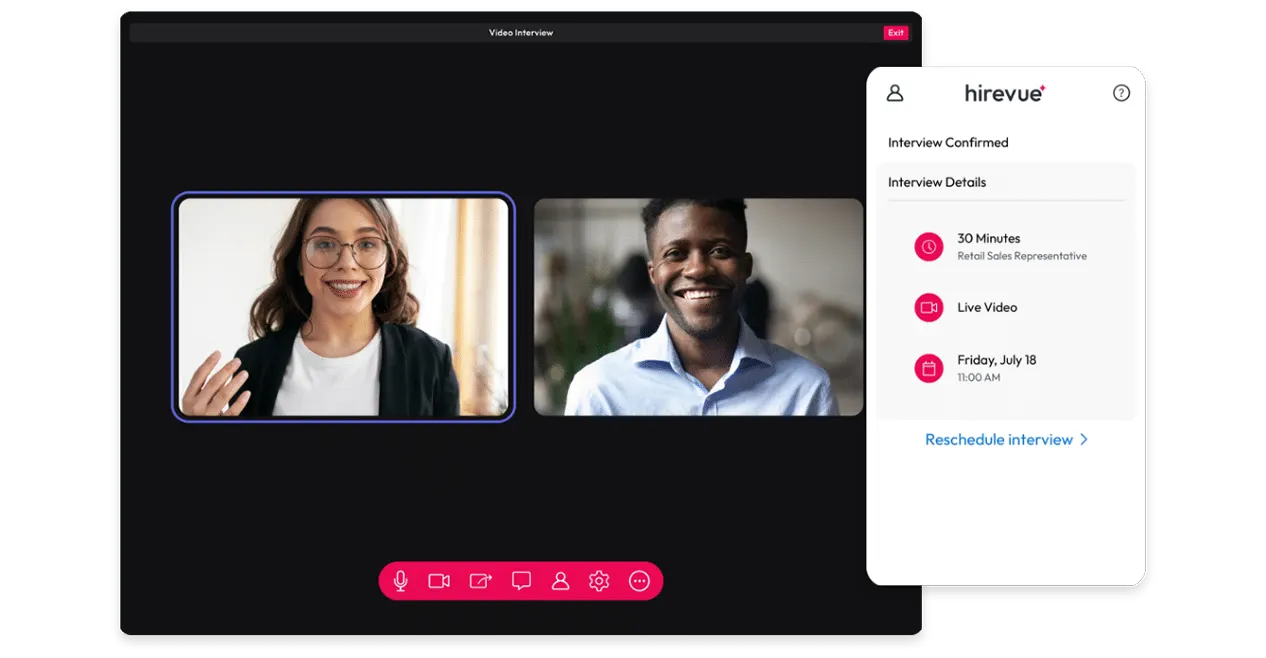
Does this question come up in AI-assisted or video interviews too? Yes, and increasingly so. Many companies now use asynchronous video interview platforms (like HireVue or Spark Hire) as a first-round screen, and behavioral questions are among the most common prompts. The same STAR+L structure applies, but be especially mindful of pacing, since you typically can't gauge when to wrap up from an interviewer's cues. Time yourself and aim for 90 seconds max in async formats.
The failure question is ultimately an opportunity, and most candidates waste it by deflecting, over-qualifying, or skipping the part that matters most. Walk in with a real story, a clear structure, and a genuine learning arc, and you'll stand out from the majority of people who either dodge the question or drown in unnecessary detail. Pick your story today, map it to STAR+L, say it out loud, and time it. That one hour of preparation could be the reason you get the offer.
Editor's Picks
 News
News 57,000 Jobs Added: How to Get Hired in the 2026 Slowdown
Jul 10, 2026
 Interviews
 Ace Your AI Video Interview in 2026: HireVue Tips & Prep Guide
Jul 10, 2026
 Resume
 Beat AI-Powered ATS in 2026: What Your Resume Must Do Now
Jul 10, 2026
 Skills
 Best AI Skills to Put on Your Resume in 2026 (Get Hired Fast)
Jul 10, 2026