8 STAR Stories Every Job Seeker Must Prepare for 2026 Interviews
Prepare these 8 essential STAR method stories before your 2026 interview. Includes frameworks, sample answers, and a ready-to-use prep checklist.
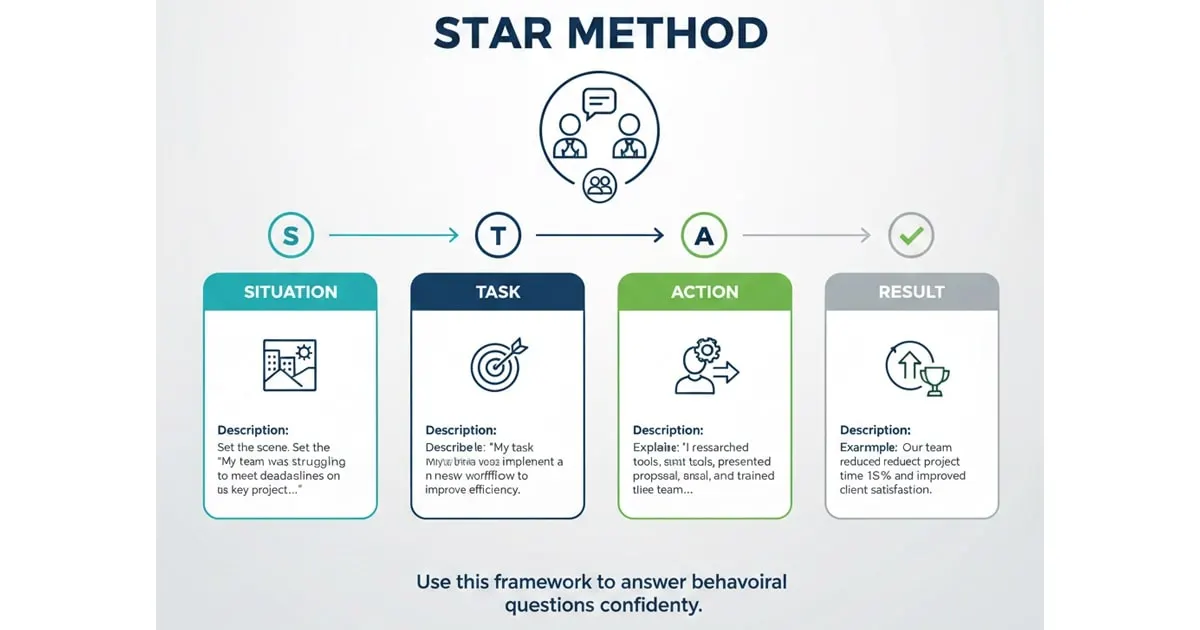
8 STAR stories every job seeker must prepare for 2026 interviews
Most candidates walk into a behavioral interview hoping a good story will come to them on the spot. It won't. That gap between hoping and preparing is exactly why only 34% of candidates show up with structured STAR examples, even though 87% of employers use behavioral interviews as their primary assessment tool (NACE Job Outlook 2026). The candidates who get offers aren't necessarily the most qualified in the room. They're the most prepared.
By the end of this article, you'll have eight fully mapped STAR stories: the exact ones that come up again and again across tech, finance, healthcare, and beyond. You'll also get sample answer frameworks, the mistakes that quietly knock candidates out, and a checklist you can use the same day.
What interviewers are actually evaluating in behavioral questions

Before you build your stories, understand what's really being measured. Behavioral questions aren't small talk designed to warm you up. They're structured assessments. According to Schmidt and Hunter's landmark meta-analysis, structured behavioral interviews have a predictive validity of .51, making them one of the strongest hiring tools in existence. More recent corrections by Sackett et al. found structured interviews predict job performance at .42 versus just .19 for unstructured conversation. Interviewers know this. That's why 60% of interview time in 2026 is now spent on behavioral questions, not technical skills.
Here's what they're scoring when you answer:
- Evidence of ownership: Did you personally drive the outcome, or were you a bystander in your own story?
- Judgment under constraints: How did you decide what to do when the path wasn't obvious?
- Collaboration and communication style: How do you operate when working with, or against, other people?
- Self-awareness: Can you honestly reflect on what you'd do differently, not just celebrate what went right?
- Quantified impact: Did you produce a measurable result, or just activity?
LinkedIn Talent Solutions research found 92% of talent professionals consider soft skills equally or more important than hard skills. These eight stories are your proof of those skills.
How to build a STAR story that actually lands
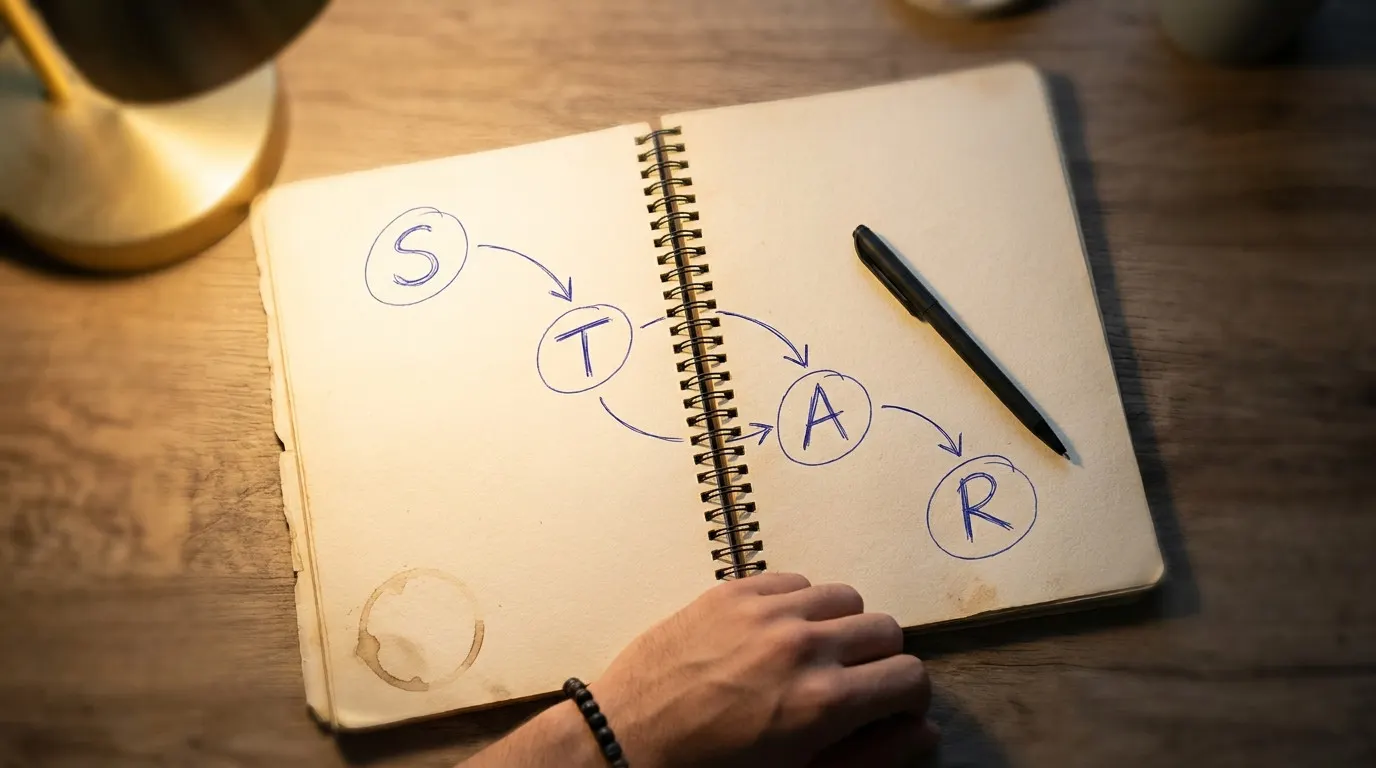
The STAR framework (Situation, Task, Action, Result) is the standard. But most people misuse it by spending too much time on setup and rushing the part that matters. Here's the right time split, per MIT's Career Advising & Professional Development guidance:
- Situation (20% of your answer): Set the scene briefly. Give enough context so the interviewer understands what was at stake, not a full company history.
- Task (10%): State your specific responsibility or goal. What were you accountable for?
- Action (60%): This is where your answer lives. Walk through what you personally did, step by step. Don't say "we" and hide in the team. Use "I."
- Result (10%): Land with a number. Percentage improvement, dollars saved, hours reduced, customers retained. A data point makes the result stick. Close with a one-sentence takeaway if it adds depth.
The golden rule: if your story doesn't have a number in the Result section, it's not ready. Adjectives like "significantly improved" or "very successful" are forgettable. "Reduced onboarding time by 30%" is not.
Draft each story in writing first. Speak it out loud. Time it: aim for 90 to 120 seconds per answer. Anything shorter lacks depth; anything longer loses the interviewer.
The 8 STAR stories to prepare
1. Leadership and taking initiative
Why they ask it: Even if you've never managed a team, every interviewer is assessing whether you'll wait to be told what to do or whether you'll step up when it matters. Companies promoting from within look for this signal early.
Common question: "Tell me about a time you took the lead on a project or initiative."
Sample answer framework:
"Our team was preparing for a product launch when our project manager went on unexpected medical leave two weeks out. I saw the coordination starting to slip, so I volunteered to take over the weekly stand-ups and built a shared tracker to keep deliverables visible. I held daily check-ins with the four sub-teams, flagged two blockers to senior leadership, and redistributed two tasks that were falling behind. We launched on schedule, and the VP noted in the debrief that it was our smoothest launch of the year. NPS feedback from the internal rollout was 91%, up from our previous average of 74%."
Customise it: Replace the project type with one from your own industry. What's the measurable "launch" equivalent in your field: a client deliverable, a campaign, a process rollout?
2. Conflict resolution and working with a difficult person
Why they ask it: Conflict mitigation was the top soft skill on LinkedIn's Skills on the Rise 2025 list. Workplace confrontation is measurably rising. A Harris Poll found 30% of employed job-seekers report their colleagues are more confrontational than three years ago. Interviewers need to know you can navigate that without creating new problems.
Common question: "Tell me about a time you had a conflict with a coworker. How did you handle it?"
Sample answer framework:
"I was working with a colleague on a client proposal where we disagreed on the pricing strategy. She wanted to undercut competitors significantly, and I believed that would erode our margins and set a bad precedent. Instead of escalating, I asked if we could block 30 minutes to walk through both approaches side by side with the data. I built a quick comparison showing margin impact over three contract cycles. She raised a valid point I hadn't considered about client acquisition in that segment, so we landed on a hybrid approach. The proposal was accepted, and the client renewed at the standard margin six months later."
Customise it: The key is showing what you did, not detailing how unreasonable the other person was. Resolution and learning, not blame.
3. Problem-solving under pressure
Why they ask it: SHRM's 2025 Talent Trends report ranks critical thinking among the top skills employers need through 2030, and it's one of the hardest things to assess from a resume alone. This question surfaces how you think when the stakes are high and time is short.
Common question: "Describe a time you had to solve a difficult problem quickly with limited resources."
Sample answer framework:
"Three hours before a client presentation, our data pipeline failed and the dashboard we were presenting was pulling incorrect figures. I had no time to wait for our data team. I pulled the raw export from our source system, rebuilt the key metrics manually in Excel, and flagged one chart as 'preliminary' with a note explaining we'd confirm by end of day. The presentation went ahead. The client appreciated the transparency, we confirmed the corrected figures within two hours, and the contract was signed that week, worth approximately $85,000."
Customise it: Your version should highlight how you diagnosed the problem, what you ruled out, and what you decided. The reasoning chain matters as much as the result.
4. Failure and what you learned from it
Why they ask it: This is a test of self-awareness and growth mindset, two traits that predict long-term performance. Interviewers aren't looking for perfection. They're looking for honesty, accountability, and evidence you've evolved.
Common question: "Tell me about a time you failed or made a significant mistake. What did you do?"
Sample answer framework:
"Early in my role as a marketing coordinator, I launched an email campaign without running it through our compliance checklist. I assumed it had already been reviewed. It hadn't, and one line in the copy was flagged by our legal team after it went out to 12,000 subscribers. We sent a correction email within four hours, and I wrote a post-mortem for the team. I built a two-step sign-off process that required explicit confirmation before any external send. In the 18 months since, we've had zero compliance flags on outbound campaigns."
Customise it: Pick a real failure, not a humble-brag ("I work too hard"). The fix you implemented afterward is the most important part of this story.
5. Collaboration and teamwork
Why they ask it: Remote and hybrid work in 2026 means teams are often distributed across time zones and functions. Interviewers want evidence you can produce results with people, not just alongside them.
Common question: "Give me an example of a time you worked effectively as part of a team to achieve a goal."
Sample answer framework:
"I was part of a cross-functional team of five (engineering, design, and marketing) tasked with redesigning our onboarding flow within eight weeks. I took ownership of the content and copy, but I also set up a shared Notion workspace so everyone could see dependencies and flag blockers asynchronously. When design and engineering hit a disagreement on timeline, I mediated a quick call and proposed a phased release to unblock both teams. We shipped on time, and user activation in the first 48 hours improved by 22% compared to the previous flow."
Customise it: Show a specific contribution, not just "I was a great team player." What did you do that the team couldn't have done as easily without you?
6. Adaptability and managing change
Why they ask it: Organizational change (restructuring, AI tool adoption, new leadership) is constant. Employers want to hire people who adjust quickly, not people who resist or freeze.
Common question: "Tell me about a time you had to adapt to a significant change at work."
Sample answer framework:
"Six months into my role, our company was acquired and our entire project management process shifted from Agile to a hybrid waterfall model overnight. I wasn't familiar with the new system, but I volunteered to become the team's point of contact for the transition. I spent two weekends working through the new documentation, created a one-page cheat sheet for the team, and ran a 45-minute walkthrough session. Within three weeks, our team was meeting the new reporting cadence with zero escalations, while two other teams were still submitting late reports."
Customise it: The story should show proactive adaptation. Not just surviving the change, but doing something deliberate to accelerate through it.
7. Influencing without authority
Why they ask it: Most meaningful work in 2026 happens across silos, without a direct reporting line to the people you need to move. This question assesses whether you can lead through persuasion, not just position.
Common question: "Tell me about a time you had to persuade someone to see things your way or take a course of action they were reluctant to take."
Sample answer framework:
"I needed our IT department to prioritize a security patch for our client portal, but I had no authority over their queue, and they had a six-week backlog. I put together a one-page risk brief that quantified the exposure: three enterprise clients had contractual SLAs around data security, and a breach could trigger penalties totaling $200,000. I asked for 15 minutes with the IT director, walked through the brief, and connected it to a shared business risk we both cared about. The patch was scheduled within five days. No breach occurred, and the IT director later thanked me for flagging it the way I did."
Customise it: The more specific your stakes and your reasoning process, the stronger this story lands. Show the logic you used to move someone, not just that you "communicated well."
8. Managing competing priorities and deadlines
Why they ask it: Every hiring manager fears bringing in someone who crumbles under a full plate. This question assesses time management, triage skills, and your ability to communicate proactively when you're overloaded.
Common question: "Describe a time when you had multiple high-priority projects due at the same time. How did you manage it?"
Sample answer framework:
"In Q3 last year, I was simultaneously managing a client audit, leading the rollout of a new reporting tool, and covering for a colleague on parental leave. I listed every deliverable across all three workstreams, assigned each one an impact and urgency score, and identified two tasks I could delegate to a junior analyst. I blocked my calendar into 90-minute focused sessions and set daily check-ins with my manager to flag any shifting priorities early. All three deliverables were met on time. The audit came back clean, the tool launched to positive feedback from three department heads, and my colleague's accounts stayed in good shape."
Customise it: The triage process (how you decided what to prioritize) is the part interviewers actually want to hear. Walk them through your thinking, not just your outcome.
Mistakes that eliminate candidates
Telling a "we" story instead of an "I" story. Interviewers are evaluating you. Using "we" throughout makes it impossible to assess your individual contribution. Fix: audit your stories, and make sure every action step starts with "I."
Spending more than 30 seconds on Situation and Task. Overloading the setup buries the skills demonstration. Fix: write your Situation in two sentences max, your Task in one.
Ending without a number. "The project was a success" is not a result. Fix: before any interview, attach at least one data point to every story. Even an estimate works ("saved approximately 6 hours per week").
Choosing a story that makes someone else look bad. Even if accurate, blame-heavy stories signal poor professional judgment. Fix: reframe conflict stories around what you did, not what they did wrong.
Using the same story for every question. Interviewers notice. Fix: prepare at least one distinct story per competency listed in this article: eight stories, eight scenarios.
Apologizing for the imperfection in your story. "It wasn't a perfect situation, but..." immediately undercuts your credibility. Fix: present your story with confidence and let the interviewer assess it.
Your immediately actionable prep checklist
Use this before your next interview, ideally starting at least five days out:
- Map these eight competencies to the job description and identify which three to five the role emphasizes most
- Write out each STAR story in full sentences before you try to speak it
- Add at least one specific number to every Result section
- Record yourself delivering each story and play it back: check for "we" overuse and rambling setup
- Time each story: target 90 to 120 seconds
- Prepare a second story for the top two or three competencies, in case the interviewer asks for another example
- Review the job description for exact language (e.g., "cross-functional collaboration," "fast-paced environment") and mirror that language in your stories
- Prepare a short "what I'd do differently" closing line for your failure/mistake story
- Practice out loud with a friend or record a mock interview: reading notes is not the same as speaking naturally
- On the day: bring a short cheat sheet with your eight story titles (not full scripts) to glance at if needed
FAQ
How many STAR stories do I actually need to prepare? Eight covers the core competencies that appear across virtually every industry and seniority level. In practice, having 10 to 12 gives you room to pick the strongest fit for each question. Prepare at least two stories per major competency so you're not recycling the same example if a follow-up is asked.
What if I don't have a lot of work experience? Can I use academic or volunteer examples? Yes. Interviewers at the entry level expect this. A team project, a volunteer leadership role, a freelance client situation: any context where you took action and produced an outcome is fair game. What matters is the structure and the evidence of competency, not the job title.
How do I handle a behavioral question when I genuinely can't think of a relevant story? Don't panic and don't invent one. If you're stuck, it's acceptable to say, "I'd like to take a moment to think of the best example." A five-second pause is professional, not weak. If you truly have no direct experience, use a hypothetical framed honestly: "I haven't faced that exact scenario, but here's how I'd approach it." Then walk through your reasoning.
Should I use the same STAR story in multiple interviews at different companies? Yes, if it's your strongest example for that competency. The story belongs to you. Just make sure you've tailored the framing to each company's context, using language from their job description and connecting your result to something they clearly care about.
How long should a STAR answer be? 90 to 120 seconds is the sweet spot for most behavioral questions. That's roughly 200 to 250 words spoken at a natural pace. If you're going beyond two minutes, you're over-explaining the Situation. Trim the setup; expand the Action.
Behavioral interviews aren't going anywhere. If anything, they're becoming more structured and more predictive as hiring teams get better at using them. The good news is that preparation here is genuinely learnable. You don't need to be a born storyteller. You need eight well-built stories, practiced out loud, with real numbers attached. Pick one story from this list today, write it out using the STAR breakdown, add a number to the result, and say it aloud twice. That's your starting point, and it already puts you ahead of the majority of candidates walking into the same room.
Editor's Picks
 News
News 57,000 Jobs Added: How to Get Hired in the 2026 Slowdown
Jul 10, 2026
 Interviews
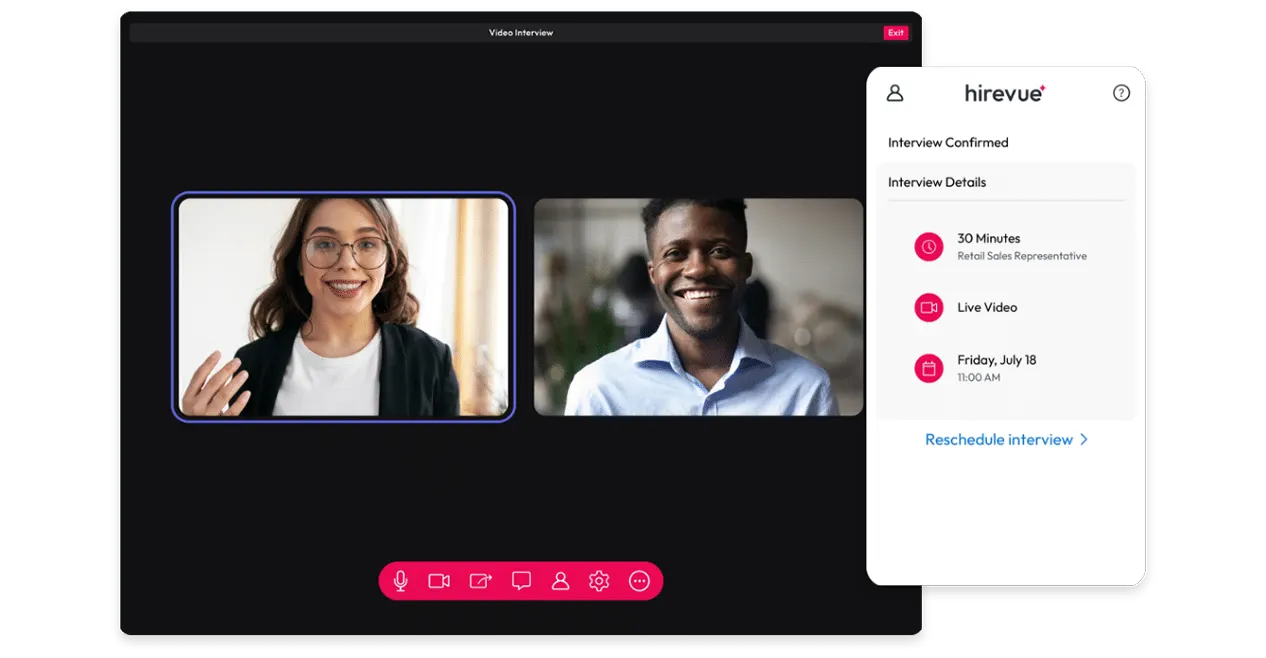
 Ace Your AI Video Interview in 2026: HireVue Tips & Prep Guide
Jul 10, 2026
 Resume
 Beat AI-Powered ATS in 2026: What Your Resume Must Do Now
Jul 10, 2026
 Skills
 Best AI Skills to Put on Your Resume in 2026 (Get Hired Fast)
Jul 10, 2026