7 Proven Fixes for Job Applications Getting Ignored in 2026
Stop getting ghosted. Here are 7 proven, data-backed fixes to get your job applications noticed and land more interviews in 2026.
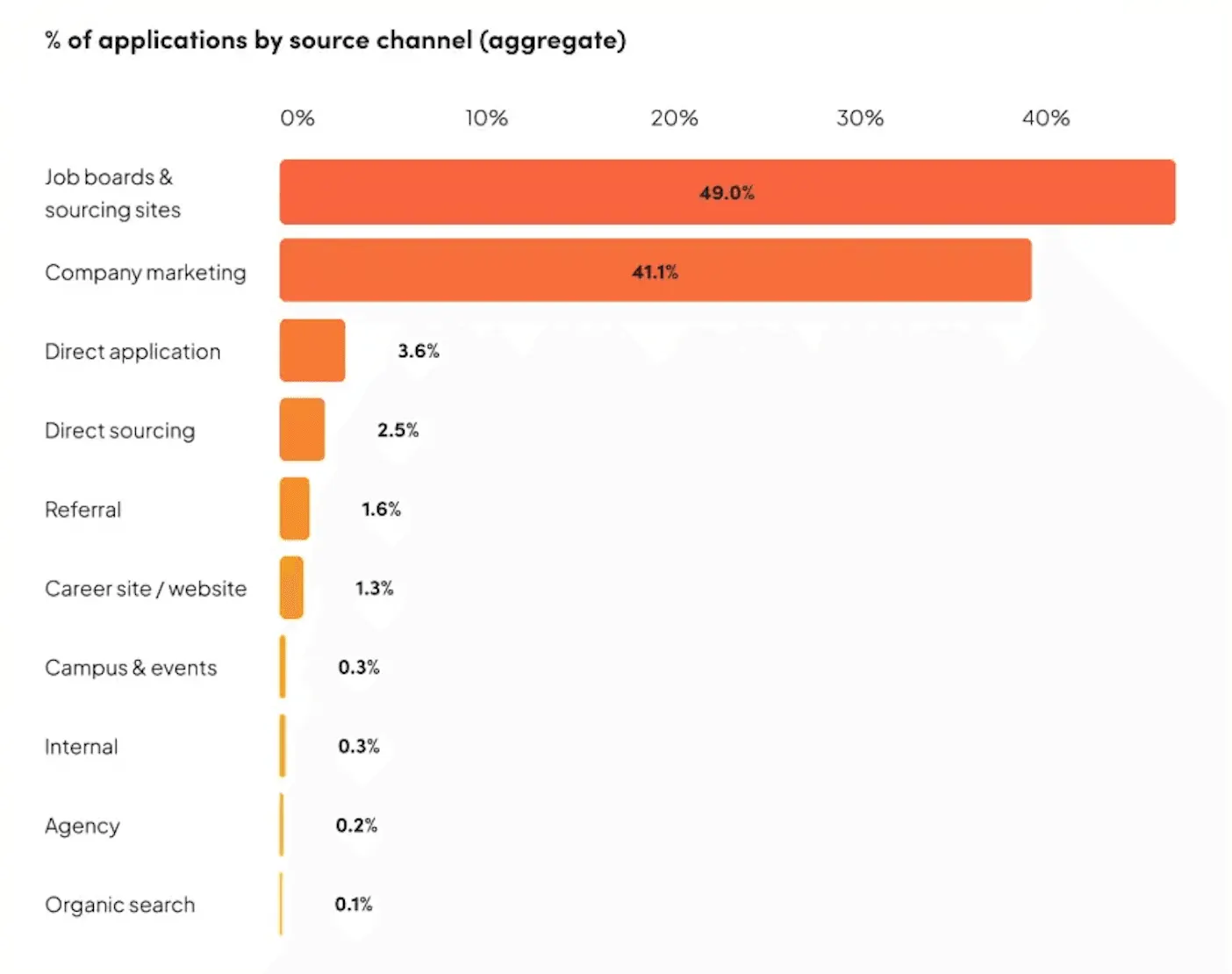
7 Proven Fixes for Job Applications Getting Ignored in 2026
You're applying. You're waiting. You're hearing nothing. And it's not because you're unqualified.
The average job application in 2026 has a 0.4% chance of landing the role, and response rates have dropped 3x since 2021. If your applications are disappearing into silence, the problem almost certainly isn't you. It's the approach. This article breaks down seven specific, research-backed fixes that change that equation. Read it once, then put at least one of them into practice today.
Why this matters right now

The hiring market in 2026 is the tightest it's been in nearly a decade. U.S. job openings fell to 6.5 million in December 2025, the lowest since 2017, and for the first time since the pandemic, job seekers now outnumber open roles. Recruiters are handling 56% more open positions than they did a few years ago, which means they have less time, not more, for each application they receive.
Here's what that looks like on the ground:
- The average job posting receives 242 applications. Only 2, 3% of applicants ever get a response.
- 81% of recruiters spend less than a minute on a CV during initial screening. The average first scan is just 11.2 seconds.
- 99.7% of recruiters use filters inside their Applicant Tracking System (ATS), meaning your resume can be eliminated before a human ever reads it.
The good news? Most of your competition isn't adapting. They're still sending generic resumes, ignoring formatting rules, and skipping the moves that actually move the needle. The fixes below are your edge.
The 7 fixes: a step-by-step breakdown

Fix 1: Tailor every single application
Generic resumes get a 2.68% conversion rate to interview. Tailored resumes hit 5.75%, a 115% improvement from one change. Yet 54% of candidates still fire off the same resume to every job.
Tailoring doesn't mean rewriting your entire resume each time. It means making targeted adjustments in three places:
- Professional summary: rewrite the opening 2, 3 sentences to reflect the specific role and its language.
- Skills section: mirror the exact keywords from the job description (more on why in Fix 2).
- Bullet points: swap in the top 2, 3 responsibilities from the posting and connect them to your real experience.
Resumes that align with 70% or more of a job description's keywords increase callback rates by 2.5x. Candidates who send 10, 12 carefully tailored applications per week see response rates of 15, 25%, compared to just 2, 3% for those blasting out 25+ generic ones. Quality beats volume every time.
Weak: "Managed social media accounts and created content." Strong: "Grew brand Instagram following 43% in six months by launching a weekly short-form video series, driving a 28% increase in inbound inquiries."
Fix 2: Make your resume ATS-readable (without killing the content)
98.8% of Fortune 500 companies use an ATS, and here's the nuance most job seekers get wrong: ATS tools don't auto-reject you. They organize you. Human recruiters make the final call. But if your resume doesn't parse cleanly, you never reach a human.
70% of resumes are rejected due to formatting issues alone, even when the candidate is qualified. Here's what to eliminate:
- Tables and text boxes (ATS can't read them reliably)
- Multi-column layouts (content often drops or scrambles)
- Headers and footers (contact info stored there gets lost)
- Graphics, icons, or logos
- Unusual fonts or non-standard section labels
Plain DOCX format has just a 4% failure rate in ATS parsing. PDF can work, but only submit it if the job posting explicitly says it's accepted. Stick to standard section headings: Work Experience, Education, Skills, Certifications. ATS systems are trained on those exact labels.
The median ATS compatibility score across real applications is just 48 out of 100, meaning the average resume is missing more than half the keywords it needs. Tools like Jobscan let you paste in a job description and see exactly where your gaps are.
Fix 3: Quantify your achievements
33% of resumes are missing quantifiable achievements, and that's one of the first things recruiters look for. Numbers pull the eye. Figures like "increased revenue 34%" are processed faster by the brain than narrative text, which is exactly what you want in an 11-second scan.
Adding quantified results to your resume increases your chances of making the shortlist by 40%. You don't need a sales job to have numbers. Try these angles:
- Volume: "Managed a caseload of 80+ clients simultaneously"
- Speed: "Reduced onboarding time from 3 weeks to 5 days"
- Scale: "Supported a team of 14 across three time zones"
- Growth: "Increased email open rates from 18% to 31% in Q2"
- Savings: "Identified process gap that saved 6 hours of manual work per week"
If you genuinely can't find a number, use ranges or comparatives: "one of three team members selected," "top-quartile performance rating two years running." Specificity signals credibility, even when the number is modest.
Fix 4: Nail the top third of your resume
80% of a recruiter's attention lands on the top 25% of your resume page: your name, current title, most recent company, and your professional summary. If that section doesn't immediately signal fit, nothing below it gets read.
Lead with a 2, 3 sentence professional summary that does three things: names your role, states your strongest value, and anchors it with one concrete result. Avoid adjective lists like "results-driven, detail-oriented professional." Nobody hires adjectives.
Resumes with a tailored professional summary are 36% more likely to pass ATS screening and make a stronger impression on the human who reads them after.
Weak: "Experienced marketing professional with a passion for storytelling and team collaboration." Strong: "B2B content marketer with 6 years driving pipeline growth for SaaS companies. Most recently scaled a content program from 8K to 95K monthly organic visitors in 18 months at a Series B startup."
Fix 5: Go around the queue with direct outreach
Most job seekers apply through the job board and wait. Here's what the data suggests: up to 70, 80% of roles are filled through networking or referrals before they're ever widely advertised. The hidden job market is real, and direct outreach is how you access it.
The move is simple but underused. Find the hiring manager or a team member on LinkedIn, send a short, specific note, and make a human connection before or alongside your application. Keep the message under 100 words, reference something specific about the company or role, and ask one clear question. Not for a job, just for a conversation.
A referral also changes your odds inside the ATS considerably. Many companies move referred candidates to the top of the pile by default. One warm connection can leapfrog 241 other applicants.
Fix 6: Fix your LinkedIn before you apply anywhere else
Recruiters don't just review your resume. They look you up. LinkedIn profiles with a photo receive 21x more views, and a complete profile makes you 40x more likely to be found by inbound recruiters.
Three quick wins that most candidates skip:
- Turn on "Open to Work" (visible to recruiters only if you don't want your employer to see it). This triggers LinkedIn's algorithm to surface you in recruiter searches.
- Write your headline for searchability, not just your current job title. Use the title you want next, plus one or two relevant skills: "Product Manager | SaaS | Growth & Retention."
- Add your top 5 skills and get endorsed. LinkedIn's search algorithm weights endorsed skills heavily in recruiter filters.
Your LinkedIn "About" section is also prime real estate. Mirror the language you're using in your professional summary and include the role title you're targeting so you show up in keyword searches.
Fix 7: Apply faster, timing is a real advantage
Applying within the first 48, 96 hours of a posting going live can significantly increase your response rate. Recruiters often review the first batch of applications before the volume becomes overwhelming, and early applicants get more attention per application.
Set up job alerts on LinkedIn, Indeed, and niche boards for your target roles and companies. When a match drops, move fast. A well-tailored application submitted in hour 24 beats a perfect resume submitted on day 10. Many ATS systems also display application timestamps to recruiters, so being early signals genuine interest.
Common mistakes that get applications ignored
These are fixable, but only if you know to look for them:
- Using a one-page rule as gospel. One page works for entry-level; two pages is fine and often preferred for mid-career professionals with 5+ years of experience. The rule is relevance, not length.
- Applying to roles you're only 50% qualified for without addressing the gap. If you're missing a key requirement, acknowledge it in your cover letter and pivot to a transferable strength. Don't leave recruiters to fill in the blank negatively.
- Copying job description language word-for-word in blocks. Matching keywords is smart; copying whole sentences looks lazy and can trigger spam filters in some ATS tools.
- Leaving your contact info in a header or footer. ATS systems often can't parse headers and footers, so your phone number vanishes.
- Applying through the job board only. Always follow up with a LinkedIn connection or a brief message to a relevant contact. Two touchpoints beat one.
- Ignoring the cover letter when it's optional. "Optional" means most people skip it, which means submitting one is a differentiator. Keep it to three short paragraphs: why this role, why you, one proof point.
Tools and platforms to use right now
Use these resources to put the fixes above into immediate action:
| Tool | What It Does | Best For |
|---|---|---|
| Jobscan | Scores your resume against a job description for keyword match | ATS optimization (Fix 2) |
| LinkedIn Jobs | Job alerts, direct outreach, recruiter visibility | Fixes 5, 6, and 7 |
| Teal | Tracks applications, tailors resumes, stores versions | Fixes 1 and 7 |
| Resume Worded | AI-powered resume feedback and ATS scoring | Fixes 2, 3, and 4 |
| Hunter.io | Finds professional email addresses for direct outreach | Fix 5 |
| Google Alerts | Monitors company news for outreach context | Fix 5 |
| Huntr | Visual job search tracker with pipeline management | Organizing your search overall |
One practical habit: keep a master resume with every role, bullet point, and achievement you've ever had. When you tailor for a new application, copy from the master and trim. Never start from scratch each time.
Situation-specific advice
If you're a career changer
Your biggest challenge is a keyword mismatch. Your experience is real, but the language doesn't map to the new field. Spend time studying job descriptions in your target industry and identify the transferable skills they're actually asking for. Then reframe your existing bullets using that language. A functional or hybrid resume format can help put skills front and center before the timeline.
If you're targeting remote roles
Remote postings attract 2, 3x more applications than in-office roles, which makes tailoring even more critical. Explicitly flag remote-relevant competencies: async communication, tools like Slack or Notion, self-directed project management. Many ATS systems filter specifically for these terms when a role is remote-first.
If you're an international applicant
Make sure your resume format matches the country's standard. A CV in the UK is not the same as a resume in the U.S. For U.S. applications: no photo, no date of birth, no marital status. If you have work authorization, state it clearly near the top (e.g., "Authorized to work in the U.S. No sponsorship required" or "Currently on OPT/H-1B"). Ambiguity here causes automatic passes from recruiters who can't risk the sponsorship conversation.
Your action checklist
Use this before you submit your next application:
- Tailored my professional summary to match this specific role and company
- Matched at least 70% of the job description's keywords in my resume
- Removed all tables, text boxes, multi-column layouts, and graphics
- Saved and submitted in plain DOCX (unless PDF explicitly requested)
- Added at least 3 quantified achievements in my experience section
- Verified contact info is in the main body, not in a header or footer
- Applied within 48, 96 hours of the posting going live
- Sent a LinkedIn connection or message to a relevant person at the company
- Updated LinkedIn headline, "Open to Work" status, and top skills
- Wrote a cover letter (even if marked optional)
Frequently asked questions
Why am I not hearing back from any applications? The most common culprits are ATS formatting issues, a mismatch between your resume's keywords and the job description, or applying to roles with very high competition. Start by running your resume through a tool like Jobscan against one of the job descriptions you've applied to. The gap is usually immediately visible.
How many jobs should I apply to per week? Research consistently shows that 10, 12 carefully tailored applications per week outperforms 25+ generic ones. Focus on quality: a tailored application takes more time but converts at roughly twice the rate.
Does a cover letter actually matter in 2026? It depends on the company and role, but when one is optional and you submit a good one, it's a differentiator because most candidates skip it. Keep it to three tight paragraphs and make it specific to the role. A generic cover letter is worse than no cover letter.
How do I get past ATS systems? Match your resume's language to the job description (especially in the skills and experience sections), use a clean single-column layout in DOCX format, and include a tailored professional summary. ATS doesn't auto-reject most people. It filters by keywords and formatting, and both are fixable.
Should I follow up after applying? Yes. Within 5, 7 business days, send a brief LinkedIn message or email to the hiring manager or recruiter. Keep it to two sentences: confirm your application is in and express genuine interest in the role. It shows initiative and keeps your name visible without being pushy.
Editor's Picks
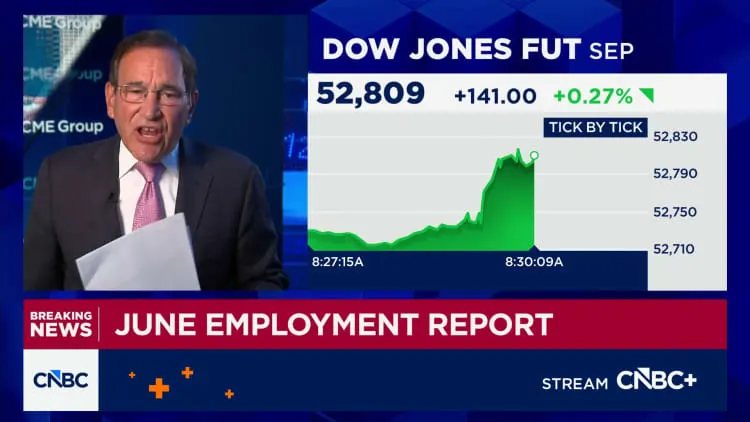 News
News 57,000 Jobs Added: How to Get Hired in the 2026 Slowdown
Jul 10, 2026
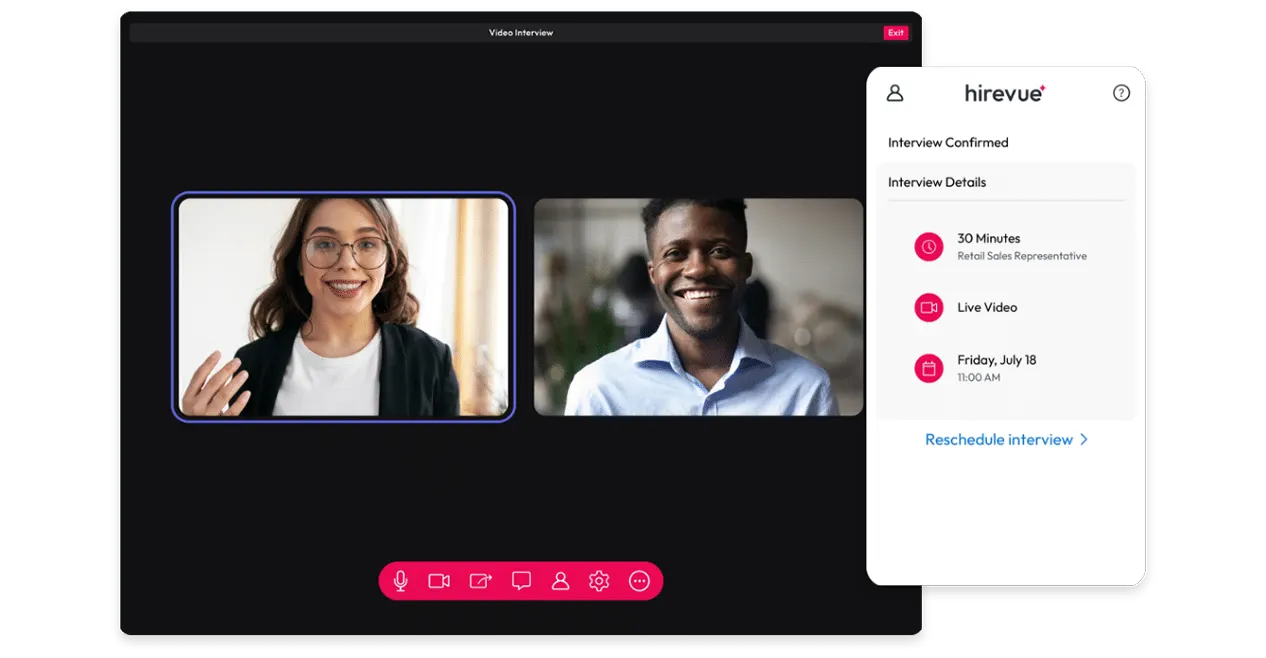 Interviews
 Ace Your AI Video Interview in 2026: HireVue Tips & Prep Guide
Jul 10, 2026
 Resume
 Beat AI-Powered ATS in 2026: What Your Resume Must Do Now
Jul 10, 2026
 Skills
 Best AI Skills to Put on Your Resume in 2026 (Get Hired Fast)
Jul 10, 2026